Explore how QA Managers can leverage GS1 Digital Link to improve Food Safety
GS1 Digital Link enhances traceability, compliance, and transparency.
Food Safety with GS1 Digital Link
GS1 Digital Link enables instant access to critical food safety information. By embedding key product data—such as batch numbers, expiration dates, and serial numbers—into a single scannable QR code powered by GS1, QA teams can quickly identify and remove contaminated or recalled products, reducing risks and ensuring consumer safety.
Retailers and consumers can also scan the Digital Link to access accurate product information, including allergens, certifications, and storage guidelines, helping to prevent mishandling and health hazards and enabling compliance with global food safety regulations.
By automating quality control and inspections, GS1 Digital Link simplifies compliance checks, providing instant access to supplier audits, test results, and certification records. This not only reduces manual errors but also enhances overall food safety management.
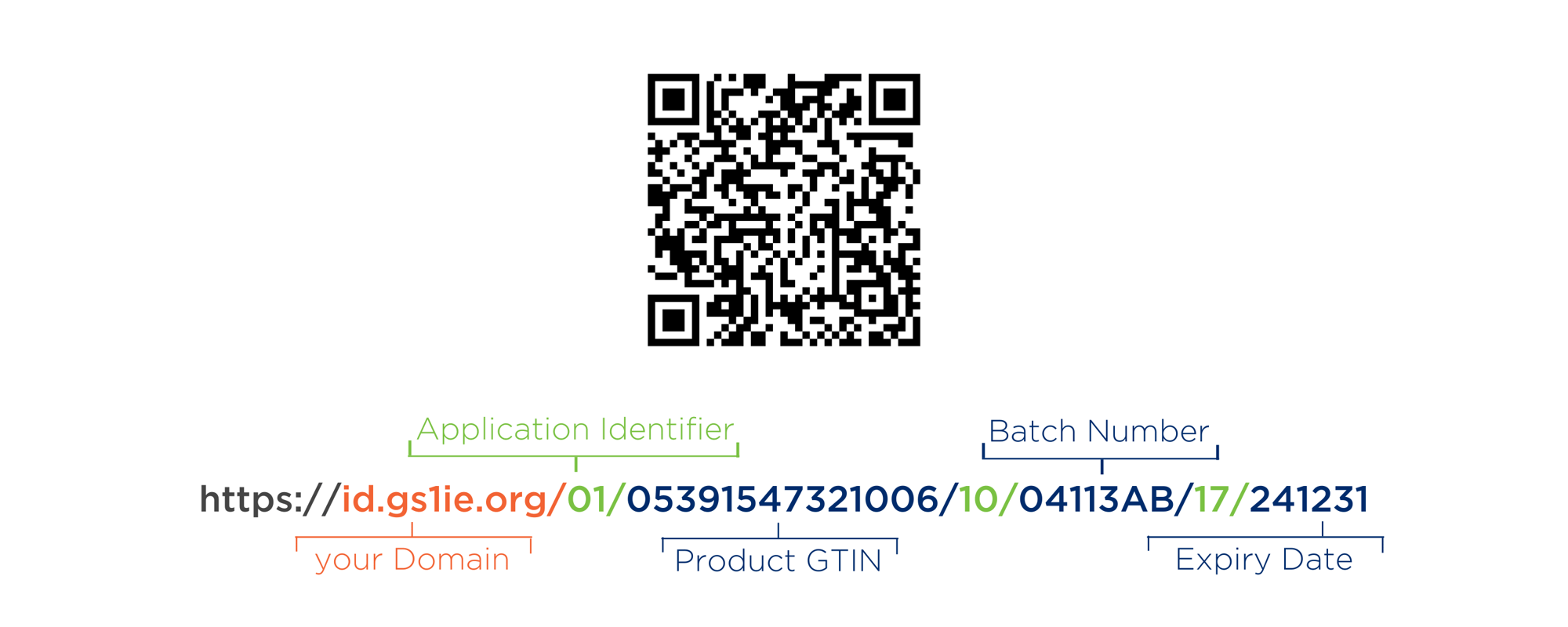
GS1 Digital Link upgrades the traditional 1-dimensional barcode by embedding additional product information in a web enabled 2D barcode such as a QR code powered by GS1. While traditional linear barcodes contain only the barcode number or GTIN, with Digital Link we can encode extra information in the QR code, such as Batch Number and Expiration Date, in a structured url format.
When scanned, the Digital Link directs users to a product-specific webpage or database, displaying relevant information such as ingredients, allergens, certifications, and traceability details. Depending on who is scanning, the Digital Link can dynamically route to different sources, such as compliance records, quality assurance reports, or recall alerts.
FAQ
What is GS1 Digital Link?
GS1 Digital Link is a standard that transforms traditional product identifiers (like GTINs) into a web-enabled format. It allows users to access real-time product data by scanning a 2D Barcode such as a QR code powered by GS1.
How does GS1 Digital Link help improve Food Safety?
By encoding batch numbers, expiration dates, and supplier information, GS1 Digital Link enhances traceability, ensuring that contaminated or expired products can be quickly identified and removed from circulation. It also helps prevent counterfeit goods and improves regulatory compliance.
What are 2D Barcodes?
2D barcodes, such as QR codes powered by GS1 and Data Matrix, store more information than traditional 1D barcodes. They can include batch numbers, expiration dates, serial numbers, and URLs, making them ideal for enhancing food traceability and safety.
Additional Use Cases for Digital Link
Retail Store Manager
Explore how GS1 Digital Link can benefit Retail Store Managers and help improve Food Safety
Cashier
Explore how GS1 Digital Link can benefit Cashiers and help improve Food Safety
Consumer
Explore how GS1 Digital Link can benefit Consumers and help improve Food Safety
Who are GS1?
GS1 is a neutral, not-for-profit, standards development organisation that develops and maintains the most widely used global standards for efficient business communication. GS1 is best known for providing a system of unique numbers, data carriers such as barcodes and information sharing standards relevant to products, relationships, assets, locations, services and processes.
GS1 standards improve the efficiency, safety and visibility of supply chains across physical and digital channels in 25 sectors including Retail Food and Grocery, DIY, Transport and Logistics, Healthcare and Construction. Its scale and reach with local Member Organisations in 118 countries, 2 million user company members and over 10 billion GS1 barcodes scanned every day, help ensure that GS1 standards create a common language that supports systems and processes across the globe.
The GS1 system of standards is the most widely used supply chain standards system in the world.